 admin | 2026-03-10 |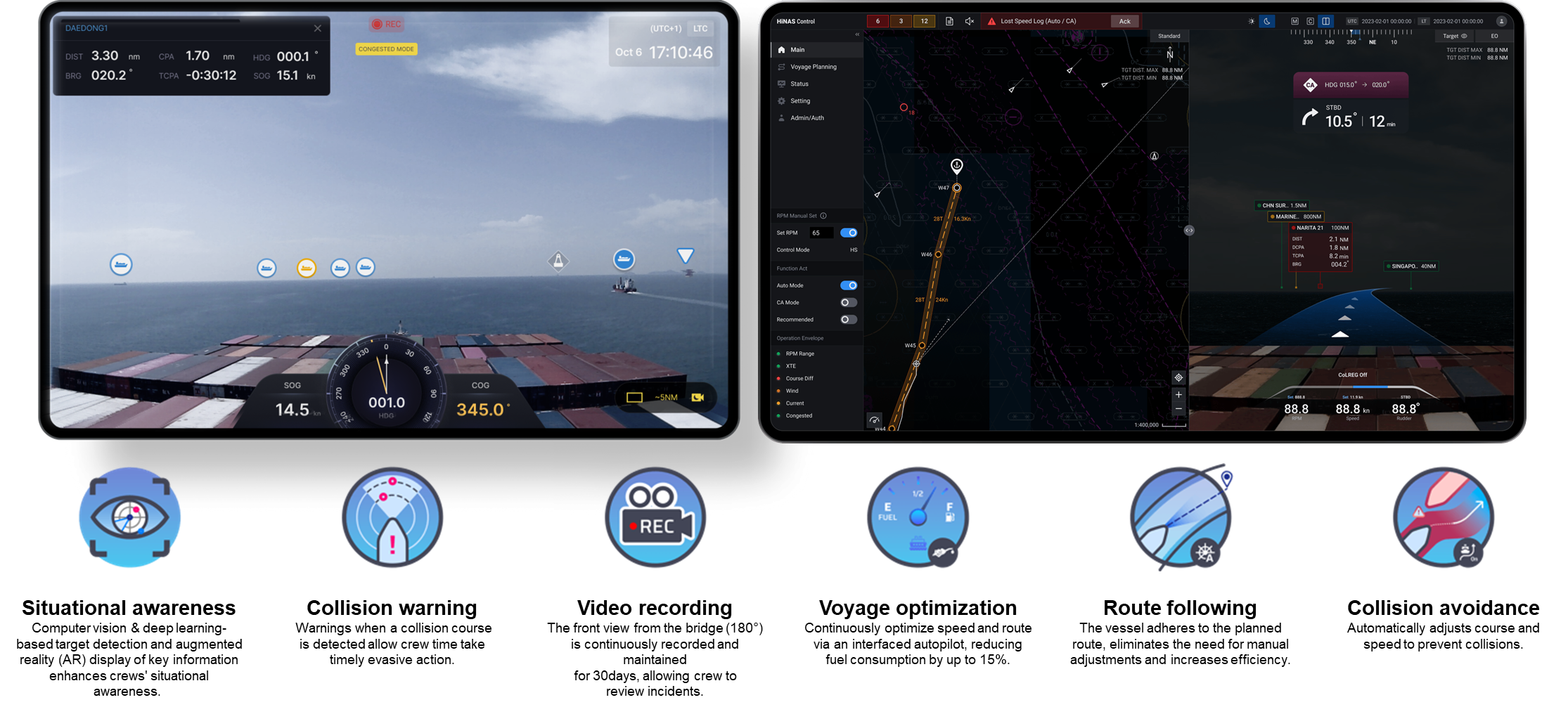
A landmark agreement will equip 40 HMM container ships and LNG carriers with Avikus HiNAS Control, marking the largest single order in the autonomous maritime industry
HD Korea Shipbuilding & Offshore Engineering (HD KSOE), through its autonomous navigation subsidiary Avikus, has signed an agreement with HMM to equip 40 large container ships and LNG carriers with HiNAS Control, a Level 2 autonomous navigation system.
According to the source material, this represents the largest single order in the history of the autonomous maritime industry.
Technology Spotlight
HiNAS Control is described as an AI-based navigation solution designed to function like an AI captain, supporting vessel movement with precision rather than simple automation alone.
Its core capabilities include deep-learning-based perception through HD cameras and radar fusion, autonomous steering and speed control for route efficiency and collision avoidance, and Smart EEOI optimization to improve engine load, heading, operational cost, and carbon efficiency.
Strategic Impact
The deployment is expected to improve both safety and sustainability across the HMM fleet. Field tests referenced in the source material indicate fuel-efficiency gains of 7% to 15%, supporting IMO decarbonization goals.
The system is also intended to reduce risk associated with human error by providing continuous monitoring and rapid decision-support capabilities, helping connect traditional shipbuilding with the future of smart and green shipping.
Technical Key Highlights
- Vessel scope: 40 units, including container ships and LNG carriers
- Core solution: HiNAS Control (Level 2 autonomous navigation)
- Key features: Collision avoidance, auto-steering, and route optimization
- Industry significance: Largest-ever commercial rollout of autonomous navigation
Future Outlook
This collaboration is positioned as a major part of HD KSOE’s digital strategy. By collecting operational data from the 40 vessels, HD KSOE and Avikus aim to refine their algorithms toward Level 4 fully autonomous navigation.
The long-term objective is to enable ships to operate across oceans with minimal human intervention and transform the global logistics chain.